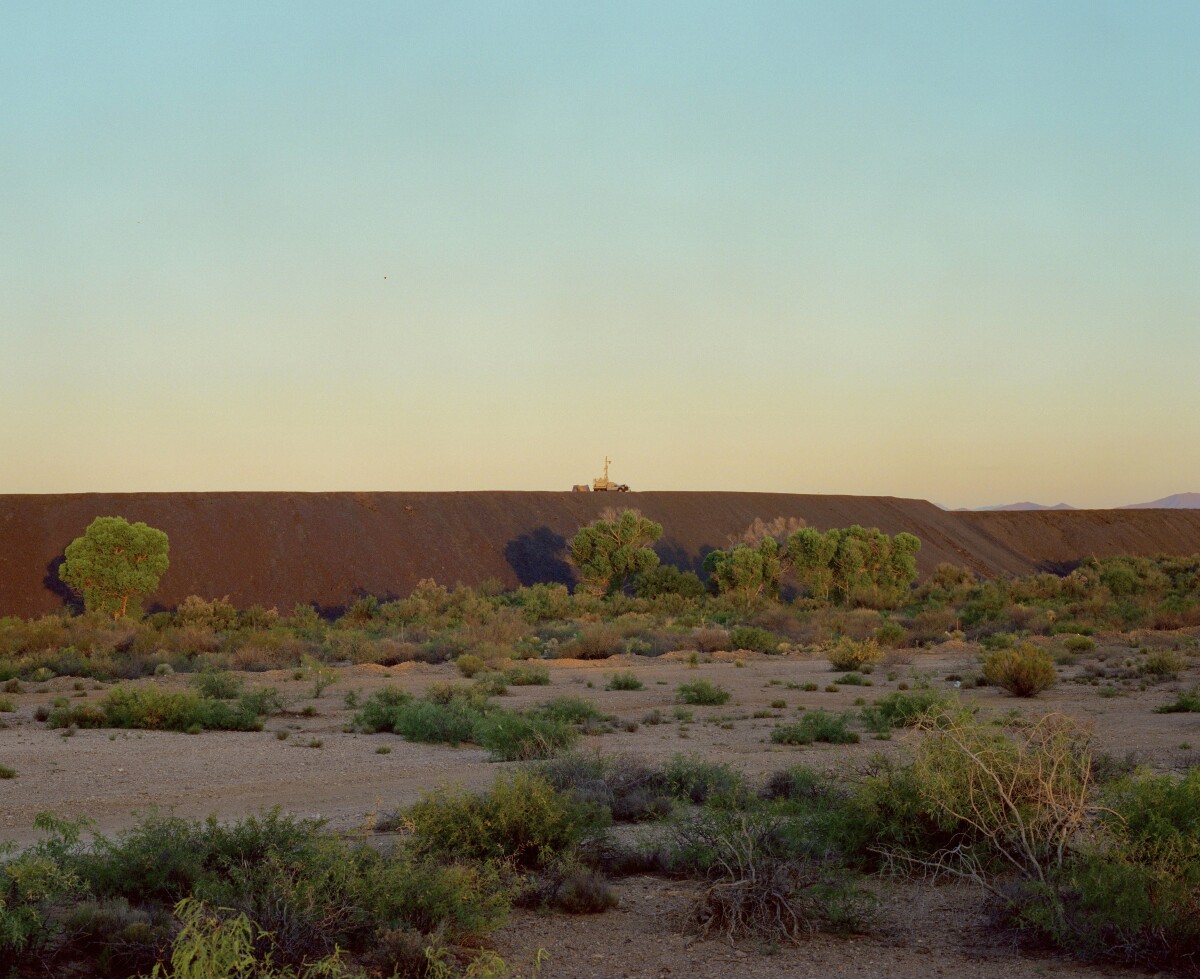
For well over a century, the border has been a legal black hole that enables the U.S. government to exclude non-citizens from entering the country—even for reasons that are discriminatory with respect to race, religion, or viewpoint. In 1892, the Supreme Court declared that, for non-citizens who have not been admitted to the United States, “the decisions of executive or administrative officers, acting within powers expressly conferred by Congress, are due process of law.” Nearly sixty years later, the Court held that, “[w]hatever the procedure authorized by Congress is, it is due process as far as an alien denied entry is concerned.” Just four years ago, the Court confirmed that, “Congress is entitled to set the conditions for an alien’s lawful entry into this country and that, as a result, an alien at the threshold of initial entry cannot claim any greater rights under the Due Process Clause.” Relying on this plenary power doctrine, the federal government has long exerted its exclusionary power over non-citizens at the border to censor potential critics and discriminate based on race and religion.
At the southwestern border of the United States, a fierce group of activists seeks to provide non-citizens with information about their legal rights, and in some cases, to engage in legal advocacy on their behalf. This essay explores the strategies that the federal government has used in recent years to disrupt these practices of border lawyering. Focusing on the actions of the first Trump and Biden administrations, the authors describe how the United States, in cooperation with Mexican authorities and right-wing political activists, surveils and seeks to repress the voices of border lawyers and their migrant clients and to undermine their legal capacity and political influence. The essay begins by examining the legal frameworks sounding in constitutional and human rights that might protect border lawyering activities. It then offers the case study of Al Otro Lado, a binational non-profit organization that provides free legal services to migrants, refugees, and deportees in the United States and Mexico, drawing from the lived experience of Nicole Elizabeth Ramos, Director of Al Otro Lado’s Border Rights Project. The essay details the practices of surveillance and harassment perpetrated by government officials and private actors working in concert with border enforcement officers, highlighting the particular harms faced by women engaged in border lawyering activities. It focuses on the legality of two aspects of the U.S. government’s tactics: sharing information with the Mexican government that could result in harm to border lawyering actors, and surveillance of border lawyering activity in Mexico that would be protected by the First Amendment if it took place in the United States but may not be protected in Mexico. These challenges are likely to return under the second Trump administration, which has launched a broad-based attack on a range of organizations that provide services, including legal representation, to immigrants. The essay ends by offering some strategies for protecting border lawyering actors.
Constitutional Rights, Human Rights
Border lawyering activities, though not a traditional focus of constitutional or human rights law, are acts of speech and association that should be protected under the First Amendment of the U.S. Constitution and Article 19 of the International Covenant on Civil and Political Rights (ICCPR). Border lawyering involves the provision of information about legal rights and processes on the Mexican side of the border to groups of migrants through ‘know your rights’ presentations or other means. It also includes accompaniment of migrants and human rights monitoring at ports of entry as well as open-air detention sites in the isolated desert and mountain border regions within the United States. These activities can be undertaken by lawyers and non-lawyers alike. Border lawyering also involves the representation of individual clients both through advocacy at ports of entry and litigation in U.S. courts to challenge laws and policies that harm migrants at the border. Though lawyers may be assisted in client representation by non-lawyers, these border lawyering activities contain at their core responsibilities that must be undertaken by lawyers only. Border lawyering also involves more traditional speech activities such as publicizing harms against migrants at the border and advocating for their protection in the public sphere. Given that the latter set of publicity-related actions fit more squarely within existing analyses of speech and associational rights, this essay will not discuss them in detail.
Whether the provision of information to and individual representation of non-citizens en el otro lado, on the other side of the border, constitutes protected expression and association under the First Amendment is contested. When it comes to the legal representation of U.S. citizens acting within the United States, the First Amendment protects, “litigation … [as] a means for achieving the lawful objectives of equality of treatment … [as i]t is thus a form of political expression.” In other words, impact litigation can be viewed as a means for a minority group to participate in political discourse. While ‘know your rights’ presentations and direct legal services for individuals would be protected by the First Amendment if they were offered within the United States, there is a dearth of caselaw examining whether these First Amendment protections extend to lawyers who represent non-citizens outside of the country. Two years ago, in U.S. v. Hansen, the Supreme Court upheld a portion of the statute that CBP has used to justify surveillance and harassment of border lawyers. That section of the INA prohibits “encourag[ing] or induc[ing] an alien to come to, enter, or reside in the United States, knowing or in reckless disregard of the fact that such [activity] is or will be in violation of law.” In dissent, Justice Jackson explained that “Customs and Border Protection (CBP) relied on the encouragement provision to justify its creation of a ‘watchlist’ of potential speakers that CBP had compiled in connection with its monitoring of a large group of migrants.” Scholars have characterized humanitarian assistance to migrants as protected speech and associational activity, but courts have not supported either approach.
Similarly, while Article 19 of the ICCPR protects the “freedom to … impart information and ideas of all kinds, regardless of frontiers, either orally [or] in writing,” its application has focused on political discourse, public discussions of human rights, and media. The UN Human Rights Committee envisions Article 19 as protecting “persons who engage in the gathering and analysis of information on the human rights situation and who publish human rights-related reports, including judges and lawyers.” It does not clarify whether or to what extent informing people of their rights in group settings and individual consultations as well as practices of accompaniment and advocacy with border officials would be protected under Article 19, or Article 22, which includes the right to freedom of association.
Border Lawyering: A Case Study in Surveillance and Harassment
Lawyers working on both sides of the border, particularly those working in Mexico, have faced increasing surveillance and harassment by U.S. Customs and Border Protection (CBP) officials and counterterrorism agents in recent years. The first Trump administration’s targeting of activist lawyers working with migrants at the border is well-documented, including through a congressional investigation and reports by the Department of Homeland Security’s Office of the Inspector General. These investigations focus on surveillance of U.S. citizens, including intrusive border inspections and the creation of a database of information about their activities. Support for these surveillance practices did not end with the first Trump presidency; the Biden administration continued to litigate through to summary judgment a First Amendment lawsuit challenging the database. Government actors have deployed a range of methods to harass border lawyers, including working with Mexican authorities to deport border lawyers from and prevent them from entering Mexico, and sharing information about border activists with private actors who spread it through right wing nationalist media platforms, multiplying and amplifying the sources of harassment. Based on the experience of Al Otro Lado’s female contractors who provided humanitarian aid at the open air detention sites under the Biden Administration, female activists are at particular risk of sexual harassment at the hands of government actors.
The U.S. government has surveilled and harassed border lawyers through the creation of ‘blacklists,’ in cooperation with the Mexican government, which then deported and refused entry to border lawyers. In October 2018, in response to the migrant caravans from Central America arriving at the southwestern border, CBP created “Operation Secure Line,” a program to surveil people it linked to the caravans, relying on publicly available information from the media and social media as well as law enforcement databases that were not accessible to the public. CBP officials researched these activists, compiling a database that listed the names, photographs, dates of birth, and citizenship status of 67 people, identifying their purported role in the caravan and whether the government had interviewed them. In January 2019, at a meeting with Mexican officials, an official from CBP’s Foreign Operations Branch (FOB), “shared two documents, including a PowerPoint presentation with pictures, names, dates of birth, countries of citizenship, and other information about dozens of American and foreign nationals.” After the meeting, a CBP-FOB official sent this PowerPoint to a Mexican official via WhatsApp; soon afterward, Mexico refused entry to five individuals on that list. The Department of Homeland Security’s Office of Inspector General (DHS OIG) found that this official was “not properly authorized to provide information about U.S. citizens to Mexico” and failed to follow record retention policies with respect to the sharing of that information. CBP also created dossiers on at least 25 individuals, including one of the authors of this essay. That file included detailed information such as a log of Nicole Elizabeth Ramos’s travels, including international travel to Central America that originated in Mexico with no connecting flights in the United States; the make and model of her car; her mother’s name and home address; and her former employment as an assistant federal public defender.
Border lawyers who had been placed on the blacklist faced a range of consequences. Focusing on the experience of lawyers from Al Otro Lado (AOL), in January 2019, one attorney was detained and then refused entry at the land border in Tijuana even though her 10-month-old son was in Mexico. Later that week, another AOL lawyer was detained in the airport in Guadalajara overnight with her seven-year-old daughter before being deported. Mexican officials told both attorneys that “the US government and an undisclosed ‘foreign government’ had issued migratory alerts against them” but failed to provide any factual or legal basis for these alerts. DHS OIG confirmed that, in December 2018, a CBP official asked Mexico to “deny entry to caravan associates,” and determined that “CBP had no genuine basis for asking Mexico to deny entry to these U.S. citizens.” Earlier in January 2019, the U.S. government revoked Nicole Elizabeth Ramos’s Secure Electronic Network for Travelers Rapid Inspection (SENTRI) pass, part of the Trusted Travelers Program, without providing any reason for doing so. Without the pass, each border crossing took approximately two to three hours, effectively foreclosing her ability as a resident of Tijuana to represent migrant clients in San Diego. DHS OIG found that CBP failed to “meaningfully assess the quality or accuracy of information before revoking [Trusted Traveler Programs] membership,” and further neglected to provide “an opportunity to submit clarifying or exculpatory information to overturn the revocations.”
Moreover, media attention to the blacklist appears to have provoked further harassment of AOL’s border lawyering staff by Mexican officials at the behest of CBP. On March 6, 2019, the same day that NBC 7 San Diego published a detailed investigation of the incidents described above, officials from Grupos Beta, the humanitarian arm of the Mexican National Institute on Migration (INM), threatened to arrest and deport an AOL volunteer. Luis Guerra, who is a dual citizen of Mexico and the United States, was providing legal orientation to asylum seekers at the border, advising them to wear clothes that would keep them warm in migrant detention facilities in the United States. Guerra recounted the Grupos Beta official stating that, “CBP keeps yelling at us for the work you’re doing, and it needs to stop.”
These reported incidents are part of a broader pattern of CBP harassment of border lawyers. In the case of Al Otro Lado, CBP has menaced Nicole Elizabeth Ramos both by referencing their surveillance of her, saying things like, “we know who you are and what you do,” and by threatening to have Mexican officials remove her from the port of entry. CBP interferes with border lawyers’ relationships with their clients, telling Ramos’s clients that she’s a “‘fake attorney’ who dispenses false information” and that she would make them pay for the legal services that she, in reality, provides for free. CBP also asks migrants how much money AOL is charging them. With respect to migrants who arrived as part of the caravan in particular, CBP officials asked them whether they spoke to any attorneys in Tijuana and asked how those attorneys coached them to lie.
Mexican border officials have engaged in surveillance of border lawyers through physical observation, photography, attempts to intercept their conversations and infiltrate their offices, and digital means. Mexican police and guardia nacional continue to take pictures of border lawyers aiding migrants at ports of entry without their consent, asking them who they are. In the case of Al Otro Lado, Mexican officials have come to their offices to photograph border lawyers and staff entering and exiting their workplace. In one recent example, when the border closure justified by Title 42 was lifted in May 2023, AOL had brought all of the staff from their Los Angeles and San Diego offices as well as their remote staff to Tijuana in order to carry out ‘know your rights’ presentations at different shelters, explaining the entry process to migrants, and to monitor the port of entry to encourage migrants to avoid high-volume entry situations. Outside their offices, staff reported individuals taking photographs of AOL employees and the building. These were plainclothes officers driving a white pickup truck, which is often an unmarked state vehicle. AOL staff members recorded the truck’s license plate, and a government contact confirmed that it was a Mexican government vehicle.
Border lawyers from Al Otro Lado have been subject to unusual levels of physical surveillance. In one instance, Nicole Elizabeth Ramos received a report from an Amnesty International researcher that indicated that the researcher believed that individuals may have pretended to be volunteers in order to infiltrate the building in which AOL and several other organizations had set up a hub for legal support and humanitarian aid for migrants. When Representative Jayapal visited Tijuana in early December 2018, FOIA records indicate that CBP had information about her itinerary that neither her office nor AOL had provided. It was unusual for CBP to have this information because the Department of State typically handles security for congresspeople visiting Tijuana. Just over two weeks later, Representatives Gomez and Barragán visited Tijuana, and again FOIA records indicated that CBP had obtained their itinerary though it had not been provided to them by their offices or by AOL.
More recently, in June 2023, Al Otro Lado staff may have been the target of an attempt to install spyware on their phones. At that time, a small migrant encampment grew outside San Ysidro East Port of Entry. These migrants believed they could seek asylum if they waited, but very few people were being processed, and the conditions of life faced by the group were harsh; migrants, including pregnant people and small children, were sleeping on the sidewalk without access to hygiene or food. AOL staff provided basic humanitarian aid and a ‘know your rights’ presentation to explain the legal process at the border, including information about the challenges of the current process, efforts to open up access at the border, and the consequences of entering at a port of entry without a CBP One appointment. A tattooed individual claimed to be an asylum seeker from Panama who had been chased all the way through Mexico and said that he thought the people who chased him were nearby. He explained that his plan was to get deported from the United States to Panama. He asked Nicole Elizabeth Ramos if he could use her cell phone to call his wife. She thought it was an odd choice to seek deportation from the United States when he could have been deported from Mexico, and found his story peculiar. She told him that AOL staff do not share their phones, and he left to use a pay phone near them. The staff kept an eye on him because of his strange behavior. The next day, AOL staff saw the same individual having a friendly conversation with Mexican immigration officials. They called Ramos to tell her that this individual entered the pedestrian line at San Ysidro East Port of Entry; when he made it to the front, he showed a document and walked into the United States. An asylum seeker could not have entered the United States so easily, raising suspicions about why he wanted to access AOL staffers’ telephones. Given the Mexican government’s “prolific” and ongoing use of Pegasus spyware against human rights activists, this encounter raised concerns that this may have been an effort to install spyware on the phones of border lawyers.
AOL has faced other instances of both physical and digital surveillance that are not clearly traceable to either government. For example, in 2019, Ramos found a GPS tracker manufactured in the United States under her vehicle. When she sought police assistance, Mexican law enforcement told her that the GPS tracker was not a crime and that they could not help her. It was not until she demanded a police report and AOL was featured in an article that discussed the harassment of their team that the Mexican police finally agreed to file a report on the incident.
CBP has amplified these harms by providing information about the work of border lawyers, including Al Otro Lado’s legal orientation information, to right wing anti-immigrant influencers with large social media platforms. As a result, Al Otro Lado has received multiple emails to different addresses associated with the organization that contained death threats and other threats of harm.
The ongoing surveillance and harassment by U.S. and Mexican government officials has left Al Otro Lado staff concerned about whether they will face retaliation for their legal work, and diminished in the work they can perform. AOL has particular concerns about the safety of its female volunteers and contract workers, given CBP’s history of physical and sexual harassment of women. AOL makes a conscious choice to hire women because migrants are likely to feel safer interacting with female staff, but the threats that these women face are very real. AOL contract workers and volunteers who identify as women have been harassed by CBP agents who pull them over and behave in physically intimidating ways. In response, the organization provided staff with mounted dashboard cameras, and they know to record any interactions with CBP, which diminishes but does not eliminate their fear for the safety of female staff.
Towards a Protection Framework
The surveillance of border lawyering actors appears to be an ongoing feature of border governance adopted by enforcement agents and is likely to be amplified under the second Trump administration. Given the current levels of political animus towards migrants, border lawyering will likely continue to be a politically disfavored activity, as enforcement actors resist the provision of information to migrants about their legal rights at the border. The road forward promises to be rocky. CBP officials are likely to continue collaborating with Mexican authorities to surveil and harass activists engaged in border lawyering, relying on anti-smuggling statutes even as they act in violation of their own policies, as their resources and political power grow. It is a real possibility that even the minimal existing protections for border lawyers contained in CBP policies will be dismantled, and it is still an open question whether the provision of legal information to undocumented migrants in Mexico is First Amendment protected activity. International human rights avenues, though far more challenging to implement in practice, are likely to be more amenable to explicit findings that border lawyering is protected activity under Article 19 of the ICCPR or Article 13 of the American Convention on Human Rights. Border lawyering actors might seek decisions from human rights bodies, as well as official analyses by special rapporteurs that speak specifically to the provision of legal guidance to migrants. The expressive nature of these efforts might begin to shift the conversation, as might assertions that these activities are protected by the First Amendment by legal scholars and federal courts of appeals in the absence of a favorable Supreme Court decision.
This question must be engaged regionally and globally, as border externalization practices in the United States and the European Union mean that many migrants cannot even reach those borders. Al Otro Lado is already engaging with smaller grassroots organizations in Mexico, Central America, and South America to find ways to provide information to migrants at an early stage. They are also engaging with litigators to plan regional and international litigation strategies, including by collaborating with organizations in Europe whose staff have been criminalized for work on behalf of asylum seekers. It is only through transnational information sharing about government-created impediments and advocacy strategies that border lawyering actors will be able to combat the efforts of the United States to export its border enforcement strategies.
Acknowledgments
Many thanks to Ahilan Arulanantham, Katy Glenn Bass, and Jameel Jaffer for helpful comments on an early draft of this essay.
© 2025, Jaya Ramji-Nogales and Nicole Ramos
Cite as: Jaya Ramji-Nogales and Nicole Ramos, Surveilling Border Lawyering, 25-21 Knight First Amend. Inst. (Oct. 3, 2025), https://knightcolumbia.org/content/surveilling-border-lawyering [https://perma.cc/R358-VHU6].
Nishimura Ekiu v. United States, 142 U. S. 651 (1892).
United States ex rel. Knauff v. Shaughnessy, 338 U.S. 537, 544 (1950).
DHS v. Thuraisiggiam, 591 U.S. __, 2 (2020).
See, e.g., US ex rel Turner v. Williams, 194 US 279 (1904); Kleindienst v. Mandel (1972). This power is laid out in INA Sec. 212(f): “Whenever the President finds that the entry of any aliens or of any class of aliens into the United States would be detrimental to the interests of the United States, he may by proclamation, and for such period as he shall deem necessary, suspend the entry of all aliens or any class of aliens as immigrants or nonimmigrants, or impose on the entry of aliens any restrictions he may deem to be appropriate.” See also Congressional Research Service, Presidential Authority to Suspend Entry of Aliens Under 8 U.S.C. § 1182(f) (Feb. 21, 2024), https://crsreports.congress.gov/product/pdf/LSB/LSB10458
The federal courts of appeals are split on the question of whether the First Amendment applies extraterritorially. See, e.g., Yahoo! Inc. v. La Ligue Contre Le Racisme Et L'Antisemitisme, 433 F.3d 1199, 1217 (9th Cir. 2006) (“Without a finding that further compliance with the French court's orders would necessarily result in restrictions on access by users in the United States, the only question in this case is whether California public policy and the First Amendment require unrestricted access by Internet users in France. In other words, the only question would involve a determination whether the First Amendment has extraterritorial application. The extent of First Amendment protection of speech accessible solely by those outside the United States is a difficult and, to some degree, unresolved issue. Compare, e.g., Desai v. Hersh, 719 F.Supp. 670, 676 (N.D.Ill.1989) (“[F]or purposes of suits brought in the United States courts, first amendment protections do not apply to all extraterritorial publications by persons under the protections of the Constitution.”), and Laker Airways Ltd. v. Pan American Airways, Inc., 604 F.Supp. 280, 287 (D.D.C.1984) (“It is less clear, however, whether even American citizens are protected specifically by the First Amendment with respect to their activities abroad[.]”), with Bullfrog Films, Inc. v. Wick, 646 F.Supp. 492, 502 (C.D.Cal.1986) (“[T]here can be no question that, in the absence of some overriding governmental interest such as national security, the First Amendment protects communications with foreign audiences to the same extent as communications within our borders.”), aff'd, 847 F.2d 502 (9th Cir.1988).”; Lamont v. Woods, 948 F.2d 825, 840 (2d Cir. 1991) (holding that the Establishment Clause applies extraterritorially).
NAACP v. Button, 83 S.Ct. 328, 336 (1963). See also In re Primus, 436 U.S. 412 (1978).
C.f. Legal Services Corp. v. Velazquez, 531 U.S. 533, 548-49 (2001) (holding legal services for indigent clients funded by the government to be “constitutionally protected expression” such that, “[w]here private speech is involved, even Congress’ antecedent funding decision cannot be aimed at the suppression of ideas thought inimical to the Government’s own interest.”) with Cuban American Bar Ass’n v. Christopher, 43 F.3d 1412, 1428-29 (11th Cir. 1995) (holding that the First Amendment right to “solicit a client for the purpose of engaging in litigation as a form of political expression . . . is predicated upon the existence of an underlying legal claim that may be asserted by the potential litigant” and that, in the case of Cuban asylum seekers detained at Guantanamo Bay, “neither the migrants nor the lawyers may assert First Amendment rights of association and speech”). See also ACLU Statement on Report of Government Tracking Journalists and Immigration Advocates at Border (Mar. 16, 2019) (quoting staff attorney Esha Bhandari, “This is an outrageous violation of the First Amendment. The government cannot use the pretext of the border to target activists critical of its policies, lawyers providing legal representation, or journalists simply doing their jobs.”), https://www.aclu.org/press-releases/aclu-statement-report-government-tracking-journalists-and-immigration-advocates.
United States v. Hansen, 143 S.Ct. 1932 (2023). In its underlying decision that was overturned, the 9th Circuit had determined the provision of “certain legal advice to undocumented immigrants” is protected speech under the First Amendment, striking down 8 U.S.C. § 1324(a)(1)(A)(iv) as overbroad and unconstitutional. See also Brief for Amnesty International as Amicus Curiae in Support of Respondent, U.S. v. Sineneng-Smith, 590 U.S. __ (2020), https://www.supremecourt.gov/DocketPDF/19/19-67/129463/20200122130557752_19-67%20bsac%20Amnesty%20Intl.pdf
8 U.S.C. § 1324(a)(1)(A)(iv),
Hansen, supra n.8 at 1964.
Shalini Bhargava Ray, Noncitizen Harboring and the Freedom of Association, 101(3) N.C. L. Rev. 678 (2023); Jason A. Cade, “Water is Life!” (and Speech!): Death, Dissent, and Democracy in the Borderlands, 96 Ind. L.J. 261 (2020).
International Covenant on Civil and Political Rights, Dec. 16, 1966, S. Treaty Doc. No. 95-19, 999 U.N.T.S. 171 (ICCPR); United Nations Human Rights Committee, Mika Miha v. Equatorial Guinea, U.N. Doc. No. CCPR/C/51/D/414/1990 (Aug. 10, 1994); United Nations Human Rights Committee, Velichkin v. Belarus, U.N. Doc. No. CCPR/C/85/D/1022/2001 (Nov. 23, 2005); United Nations Human Rights Committee, General Comment No. 34, Article 19: Freedoms of opinion and expression, U.N. Doc. No. CCPR/C/GC/34, paras. 11-13 (Sept. 12, 2011).
UN Human Rights Committee, General Comment No. 34, supra n. 12 at para. 23
Dara Lind, Documents Show Trump Officials Used Secret Terrorism Unit to Question Lawyers at the Border, Pro Publica (May 14, 2021); Department of Homeland Security, Office of the Inspector General, CBP Targeted Americans Associated with the 2018–2019 Migrant Caravan (Sept. 20, 2021) (hereinafter “DHS OIG on Caravans”).
The lawsuit ended in summary judgment in favor of the government. Phillips v. U.S. Customs and Border Protection (9th Cir. July 21, 2023) (holding that, “[b]ecause plaintiffs fail to establish that the government’s retention of the records constitutes a concrete harm, we hold that they lack standing to seek expungement of the records.”) Two related cases involving surveillance and harassment at the border of immigrants’ rights activists who are not lawyers are currently in discovery. Adlerstein v. U.S. Customs and Border Protection, 2020 WL 584660 (D. Az. Oct. 1, 2020) (plaintiffs are a journalist, a photographer, and a civil society actor and are U.S. citizens); Guan v. Mayorkas, 19-CV-6570 (E.D.N.Y. (plaintiffs are five U.S. citizen photojournalists). In a fourth related case brought by a U.S. citizen Protestant minister who “was involved in organizing a ‘sanctuary caravan’ of faith leaders, congregants, and humanitarian workers to Tijuana to provide pastoral services and support to migrants in the Migrant Caravan,” and performed marriages for members of the caravan at the request of author Nicole Ramos. Dousa v. U.S. Dep’t of Homeland Security et al., Statement of Findings of Facts and Conclusions of Law Following Bench Trial, Case No. 19-CV-1255 TWR (S.D. Ca. Mar. 21, 2023) (holding that “Dousa has established that the CBP unlawfully retaliated against her for her protected First Amendment activity, violated her Free Exercise right to minister to migrants in Mexico, and violated the RFRA when Oliveri emailed Mexican authorities on December 10, 2018, that ‘there exist[ed] a great possibility that [she] d[id] not have adequate documentation to be in Mexico’ and that she should be ‘den[ied] . . . entry to Mexico’ and ‘sen[t] . . . back to the United States.’”),
Phillips, supra n. 15; DHS OIG on Caravans, supra n. 14.
Phillips, supra n. 15 at 5; Department of Homeland Security, Office of the Inspector General, Trusted Traveler Revocations for Americans Associated with the 2018-2019 Migrant Caravan, at 5 (Jan. 8, 2022), available at https://www.oig.dhs.gov/sites/default/files/assets/2022-01/OIG-22-13-Jan22-Redacted.pdf (hereinafter “DHS OIG on Revocations).
DHS OIG on Caravans, supra n. 14, at 21.
Id. at 21-22.
Id. at 25.
Tom Jones, Mari Payton and Bill Feather, Source: Leaked Documents Show the U.S. Government Tracking Journalists and Immigration Advocates Through a Secret Database, NBC 7 San Diego (Mar. 6, 2019) (“The dossier included personal details on Ramos, including specific details about the car she drives, her mother’s name, and her work and travel history.”)
Lauren Carasik, The Government Is Targeting Immigration Lawyers, Activists, and Reporters, Boston Review (Apr. 24, 2019), available at https://www.bostonreview.net/articles/lauren-carasik-government-targeting-immigration-lawyers-activists-journalists/.
Kate Linthicum, Cindy Carcamo and Molly O’Toole, Immigrant rights attorneys and journalists denied entry into Mexico, L.A. Times (Feb. 1, 2019), available at https://www.latimes.com/nation/immigration/la-me-immigration-attorneys-detained-20190202-story.html
Id.
Amnesty International, USA: ‘Saving lives is not a crime’: Politically motivated legal harassment against migrant human rights defenders by the USA at 31 (July 2, 2019), available at https://www.amnesty.org/en/documents/amr51/0583/2019/en/
DHS OIG on Caravans, supra n. 14, at 4.
Amnesty International, supra n. 25 at 31.
DHS OIG on Revocations, supra n. 17 at 9.
Amnesty International, supra n. 25 at 34.
Id.; Tom Jones, Mari Payton, Bill Feather and Paul Krueger, Human Rights Organization Calls For End to Controversial Border Surveillance. NBC San Diego (Jul. 1, 2019), https://www.nbcsandiego.com/news/local/international-human-rights-organization-demands-immediate-end-to-controversial-us-government-border-surveillance-tactics/130887/
Id. at 33; Carasik, supra n. 22.
Carasik, supra n. 22; These facts are drawn from the personal experience of author Nicole Ramos. Zoom Interview with Nicole Ramos, Al Otro Lado (August 21 and 28, 2024, notes on file with Jaya Ramji-Nogales).
Carasik, supra n. 22.
Carasik, supra n. 22; Amnesty International, supra n. 25 at 34; These facts are drawn from the personal experience of author Nicole Ramos. Zoom Interview with Nicole Ramos, Al Otro Lado (August 21 and 28, 2024, notes on file with Jaya Ramji-Nogales).
These facts are drawn from the personal experience of author Nicole Ramos. Zoom Interview with Nicole Ramos, Al Otro Lado (August 21 and 28, 2024, notes on file with Jaya Ramji-Nogales).
Id.
See FOIA Records, p. FOIA CBP 0025113, Email dated December 1, 2018 at 3:11:59 PM PST (sender and recipient redacted) (“We are heading to PedWest at 4. They [(referencing Al Otro Lado, Representative Jayapal and her staff, or both)] aren't admitting this is their plan. Nicole is giving them "a tour" of PedWest and they will ask to see officer in charge.”) (on file with authors). See also Steve Miletich, Rep. Jayapal visits migrants in Tijuana as lawmakers prepare probe into border clashes with U.S. border patrol, SEATTLE TIMES (Dec. 1, 2018), https://www.seattletimes.com/seattle-news/politics/rep-jayapal-visits-migrants-in-tijuana-as-lawmakers-prepare-probe-into-border-clashes-with-u-s-border-patrol/
See FOIA Records, p. FOIA CBP 0025104, Email dated December 17, 2018 at 3:52 PM PST from Port Director Rosa Hernandez, Otay Mesa Port of Entry to redacted recipient (alerting recipient that Congressman Gomez and Congresswoman Barragán had arrived with Al Otro Lado, and that Hernandez had been asked to “keep them at the limit [line] per a meeting with the DIF and INAMI”) (on file with authors). The DHS Office of Inspector General has defined the “limit line” as follows: In June 2018, then-DHS Secretary Kjersten Nielsen “instructed ports to implement Queue Management. This involved CBP officers standing at a “limit line” position at or near the U.S.-Mexico border to control the flow of undocumented aliens entering CBP ports for processing.” Department of Homeland Security, Office of Inspector General, CBP Has Taken Steps to Limit Processing of Undocumented Aliens at Ports of Entry, at 6 (Oct. 27, 2020), available at https://www.oig.dhs.gov/sites/default/files/assets/2020-10/OIG-21-02-Oct20.pdf. See also Carlos Barria, The migrant mom pictured fleeing with her kids from tear gas at the US border has finally set foot on American soil, Reuters (Dec 18, 2018), https://www.reuters.com/article/world/migrant-family-who-fled-tear-gas-at-us-border-seeks-asylum-idUSKBN1OH077/; Democracy Now, This Congressmember Camped in the Cold to Escort an Asylum-Seeking Honduran Mother Across Border (Dec. 21, 2018), https://www.democracynow.org/2018/12/21/this_congressmember_camped_in_the_cold; Democracy Now, Shutdown Showdown: Rep. Nanette Barragán on Dire Conditions at Border and Trump’s “Ineffective” Wall (Dec. 21, 2018), https://www.democracynow.org/2018/12/21/rep_nanette_barragan_on_dire_conditions; Rep. Barragán Travels to Southern Border to Meet with Maria Meza, Her Daughters and Asylum Seekers (Dec. 18, 2018), available at https://barragan.house.gov/2018/12/19/rep-barragan-travels-to-southern-border-to-meet-with-maria-meza-her-daughters-and-asylum-seekers/; Representative Jimmy Gomez, Reps. Jimmy Gomez and Nanette Barragán Travel to Southern Border to Investigate Conditions of Asylum Seekers, (Dec. 18, 2018), https://gomez.house.gov/news/documentsingle.aspx?DocumentID=431
These facts are drawn from the personal experience of author Nicole Ramos. Zoom Interview with Nicole Ramos, Al Otro Lado (August 21 and 28, 2024, notes on file with Jaya Ramji-Nogales).
Natalie Kitroeff and Ronen Bergman, How Mexico Became the Biggest User of the World’s Most Notorious Spy Tool, N.Y. Times (Apr. 18, 2023), https://www.nytimes.com/2023/04/18/world/americas/pegasus-spyware-mexico.html
See Email from Nicole Ramos to Jorge Ruiz Del Angel, Secretaría de Gobernación (Oct. 17, 2019), on file with authors.
These facts are drawn from the personal experience of author Nicole Ramos. Zoom Interview with Nicole Ramos, Al Otro Lado (August 21 and 28, 2024, notes on file with Jaya Ramji-Nogales). See Ryan Deveraux, U.S. Border Agencies Continue to Harass Immigrant Rights Advocates. The ACLU Is Suing., The Intercept (Oct. 17, 2019), https://theintercept.com/2019/10/17/aclu-lawsuit-cbp-ice-journalists/
Freddy Cruz, Extremists at the Border: How the Far Right Exploits the Migrant Crisis, Targets Humanitarian Organizations and Peddles Nativist Fears, Hatewatch: Southern Poverty Law Center (July 6, 2021), https://www.splcenter.org/hatewatch/2021/07/06/extremists-border-how-far-right-exploits-migrant-crisis-targets-humanitarian-organizations; Fernanda Echavarri, An Aid Group Is Getting Death Threats for Helping Migrants in Tijuana, Mother Jones (Mar. 6, 2019), https://www.motherjones.com/politics/2019/03/an-aid-group-is-getting-death-threats-for-helping-migrants-in-tijuana/
Human Rights Watch, “They Treat You Like You Are Worthless”: Internal DHS Reports of Abuses by US Border Officials (Oct. 21, 2021), https://www.hrw.org/report/2021/10/21/they-treat-you-you-are-worthless/internal-dhs-reports-abuses-us-border-officials. See also Anezka Pichrtova, Ex-Border Agent Found Guilty of Kidnapping and Sexually Assaulting Teen, Newsweek (Sept. 2, 2024), https://www.newsweek.com/ex-border-agent-found-guilty-kidnapping-raping-teen-1947641; Sofía Mejías-Pascoe, Border Patrol agent accused of showing photos of his genitals to civilians twice while in uniform (June 4, 2024), https://inewsource.org/2024/06/04/border-patrol-agent-photos-genitals-civilians-cbp-aid-workers/
These facts are drawn from the personal experience of author Nicole Ramos. Zoom Interview with Nicole Ramos, Al Otro Lado (August 21 and 28, 2024, notes on file with Jaya Ramji-Nogales).
See infra fns, 5, 7-10, 15.
ICCPR, supra note 14; Organization of American States, American Convention on Human Rights, Nov. 22, 1969, O.A.S.T.S. No. 36, 1144 U.N.T.S. 123.
David FitzGerald, Refuge Beyond Reach: How Rich Democracies Repel Asylum Seekers (2019); Thomas Gammeltoft-Hansen, Access to Asylum: International Refugee Law and the Globalisation of Migration Control (2011).
Jaya Ramji-Nogales is the Sheller Family Professor in Public Interest Law at the Temple University Beasley School of Law.
Nicole Ramos is the director of the Border Rights Project at Al Otro Lado.