Chapter 5: Market Nationalist Logic: The Great Shopping Mall of Chinese social media
An Illustrated Field Guide to Social Media

Sections
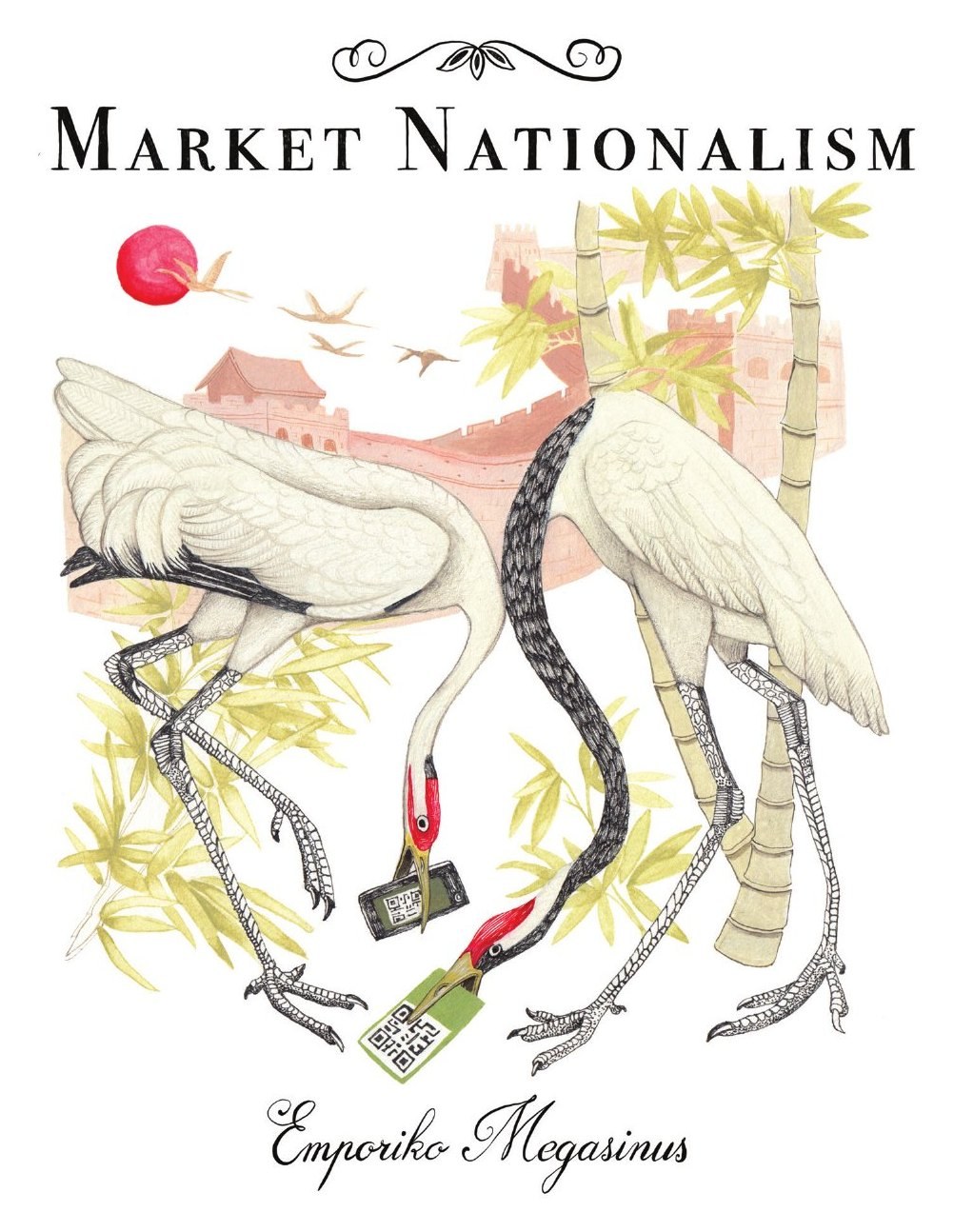
The Great Shopping Mall of Chinese social media
The West tends to focus on security, but entertainment and commerce are the key goals here
Some 2,200 years ago, when Emperor Qin Shi Huangdi, the historic first emperor of China, ordered construction of the Great Wall of China to keep out nomadic tribes from Central Asia, he could scarcely have imagined what it’s become today.1 Now a UNESCO World Heritage Site, the physical Great Wall is a major tourist attraction, filled with souvenir tchotchkes, a cable car system, toboggan slides, and market hawkers.2 Visitors can buy tickets for the wall using WeChat or AliPay, and they can post Bytedance and Bilibili videos of their experiences online thanks to free Wi-Fi and high-speed cell towers. Rather than keep people out, the contemporary Great Wall is designed to draw people in—to the tune of some 10 million tourists per year—making it one of the top tourist destinations in the world.3
The Chinese internet is often described using the image of the “Great Firewall,” a system of information and access control infamous worldwide for its sophisticated censorship.4 The words “Great Firewall” conjure up the days of Emperor Qin and the emperors who came after him, building section upon section of wall for hundreds of years as both a nationalist and military project. This outdated image of the Great Firewall promotes the idea of China as the isolated and fortified Central Kingdom, unwilling to engage with the outside world. It remains difficult to scale the Great Wall (though it’s an excellent and popular activity for interval training5) and dangerous to hold a political protest, but tourism, entertainment, and commerce better define the Wall today than isolation. While the country continues to maintain and construct border walls,6 it is a global economic powerhouse, now leading the world in foreign investment.7
Rather than Emperor Qin to guide our understanding of the logics behind the Chinese internet, we should perhaps imagine Jack Ma. Ma, an international celebrity and billionaire, has gone viral globally with his Michael Jackson moves and martial arts powers.8 While Ma does not formally operate social media—he is most famous for the e-commerce platform Alibaba and fintech provider Ant Financial—Alibaba platforms are effectively social. His story is a reminder of the twin tensions of commerce and state control that guide the logic of China’s internet: After years of international fame and celebration as one of China’s richest men and the CEO behind one of its great internet success stories, Ma was recently curbed by Beijing after he spoke critically about regulators,9 even while Alibaba itself seems not to have fallen out of favor.10
Ma appears to have crossed a line, but for successful influencers in China, decisions made by commercial platforms represent a more significant constraint and concern than state censorship. Consider Li Jiaqi (aka Austin Li), China’s King of Lipstick, a social media influencer from the second-tier city of Nanchang.11 Li is part of an influencer industry that operates directly on commercial platforms like Alibaba, helping boost emerging and major brands alike.12 He’s generated sales of more than $145 million on the Black Friday-esque Singles Day,13 thanks to 40 million fans on Douyin (China’s TikTok) and a livestreaming service on Taobao,14 Alibaba’s consumer-to-consumer retail site. Despite a barrage of harassment for breaking gender norms, Li dons the lipstick himself and shares bold opinions about the products. He’s since branched off to other products, including donating masks during a fundraiser for Wuhan when the pandemic struck.15 The state and corporate controls on speech are real, significant, and influential. But they do not prevent China’s internet from generating its own culture of celebrities and influencers.
Influencer-driven economic systems also bleed into Chinese video social media networks, which capitalize on China’s powerful, highly saturated mobile payment usage. Douyin and Kuaishou are home to numerous online influencers like Li Jiaqi, ranging from rural youth to urban housewives, who cultivate an audience for financial reward. Audiences can quickly and easily send money through the platforms using WeChat Pay or Alipay (a platform by Ant Financial). A sense of entrepreneurialism prevails, while influencers and users ultimately remain beholden to platform policies and fees.
It is time for a new image of the Chinese internet to complement that of the Great Firewall: the Great Shopping Mall. As a recent Economist special report on the future of Chinese e-commerce has argued, the distinction between social media, entertainment, and e-commerce has become quite blurry on the Chinese internet, likely more so than on the American internet.16 While others have long pointed to the salience of the shopping mall analogy for China’s economic landscape, the analogy comes with consequences for civic tech and governance.17 The Chinese vision of the internet, which has aimed to grow economic activity while tamping down political dissent, has seemed to be the exact opposite of Silicon Valley’s techno-libertarian vision. And yet today, as nation states the world over put pressure on technology companies on issues like content moderation, trade, and user privacy, the dynamics between the state and private internet companies in China presaged a global era of tension between market forces and governments where private and public interests negotiate influence over internet governance and user rights. In this way, Chinese social media logic follows a double bottom line: The market and the state, which, as David Graeber describes in his book, Debt: The First 5,000 Years, are two flanks of the same animal.18
In the West, we’ve become accustomed to reports of censorship in China as the result of a menacing authoritarian regime that threatens the core tenets of free expression. While a convenient construction, this centers authoritarianism as the guiding force for China’s social media platforms, missing the underlying capitalist logic behind the world’s largest internet ecosystem that is starting to extend past China’s borders to shape global commerce. Centering market-oriented logic helps blur the boundaries on both sides of the so-called Firewall, helping us understand that the history of China’s internet—fostered as a tense alignment between the market and the state—has extraordinary implications globally, including for those of us in Western democracies.
Like a physical shopping mall, the Chinese internet operates as a market-oriented public space, beholden first to the market and the state, and only then to users. It is an internet that promotes commerce and socializing, so long as you play by its rules. It is an internet controlled by private companies but over which the government maintains regulatory control. And, like the global spread of shopping malls, it is a model that can and has been exported to places like Iran and Vietnam.19 It influences global commerce, with the rapid spread of WeChat Pay and Alipay, accepted around the world, and Alibaba’s popularity as a global portal to the Chinese product market. The Great Shopping Mall promotes free trade over free expression, privatization at the service of politics. It is an example of what we might call market nationalism—the use of private markets to support nationalist interests, with strong government oversight.
Indeed, a strong state censorship mechanism in China alongside the erosion of a robust civil society has had severe consequences for journalists and medical professionals, as well as ordinary citizens who speak out online.20 That said, the market logic of China’s social media landscape is not dissimilar from that of Silicon Valley. In both contexts, private companies build platforms that operate using attention economics, where platforms are largely offered free to users, and companies make money through advertising.
Many of these companies end up publicly traded on international stock exchanges, creating further pressure for quarterly user growth and revenue metrics. In both contexts, a robust ecosystem of platforms, from public microblogging like Sina Weibo, to small group chat like Weixin, to viral video hosting like Douyin, satisfy a myriad of social needs. In fact, counter to conventional wisdom about China copying U.S. innovation, many Silicon Valley companies learn from and study Chinese platforms for innovative ideas.
One key difference lies in how platforms interface with their respective governments. In both China and the West, the digital is, in fact, political. However, those politics differ. The traditional framework for evaluating these distinctions has typically focused on individual user freedom. But in 2021, the notion of individual user freedom as unchecked “free speech” no longer suffices. Instead, another way of viewing the differences might be the relationship of platforms to community safety and agency, in a world with little difference between offline and online public squares.
In 2017, Bytedance was in the hot seat with Chinese government regulators. The platform that drew the ire of internet regulators in China was not the globally popular TikTok, but Bytedance’s news app, Jinri Toutiao (今日头条). “In an age where technology is key, we can’t let algorithms control everything,” exclaimed a headline from the People’s Daily.21 Regulators worried that an algorithmically generated newsfeed of content was exposing users to a variety of unsavory material, from health misinformation to political content critical of China’s authoritarian regime. This episode presaged concerns about TikTok, a Bytedance platform, that emerged in 2020 from countries like India, Pakistan, and the United States, which each raised issues with the platform’s content moderation policies and influence over public discourse.
In the case of Chinese state censorship, notions of online community safety and agency are dictated by an authoritarian government, not actual communities using the platform. Legions of human censors are employed internally by companies like Bytedance like machetes, alongside automated censorship,22 used as a “scalpel.”23 These dynamics echo similar structures in the West, where centralized platform governance hinges on low-wage content moderators rather than user communities—however, until recently, Western governments were reluctant to interfere in platforms’ operations. Everyday users of Chinese social media networks—such as Weibo, Weixin (WeChat), and video platforms like Douyin (the Chinese version of TikTok) are subject to what is termed “porous censorship” by scholar Margaret Roberts, where the state uses “fear, friction, and flooding.”24 If China were to pursue a completely watertight censorship policy under absolute dictatorship, political unrest would be inevitable. Instead, under porous censorship, the vast majority of users are aware that the Great Firewall and censorship exists, though are not often directly affected by it.
As internet policy scholar Rebecca MacKinnon has argued, China’s system of governance is an example of networked authoritarianism, a model we now see spreading throughout the technical and political worlds.25 This critical scholarship was an early warning of the political risks of the internet, helping counter an extended period of techno-optimism. It is through the mechanisms of uncertainty and fear, information friction and flooding that digital authoritarianism proliferates. Users censor themselves before posting, and access to content banned by the state requires users to take additional, potentially risky steps like using a virtual private network (VPN). Additionally, social media users are bombarded with so much content that state-sponsored channels continually package up easy-to-read material, thus enticing users to read government crafted content rather than navigating an overwhelming information landscape by themselves. At the same time, a world of video games, luxury goods, open commerce, and viral videos provides both bread and circuses for the netizenry.
As anyone who has visited or lived in China can attest to, a sense of choice—that users can purchase a VPN to access restricted content or not—gives the majority of netizens a placid, false sense of agency. The narrative of individual choice and momentary, paid access to information on platforms like Twitter and Facebook belies how that choice itself is in a larger matrix of information friction and control. While VPNs are not required to navigate many Western internet systems (though recent General Data Protection Regulation, or GDPR, and commercial licensing regulations have made them somewhat more common for uses like streaming Netflix videos overseas), much of the choice presented to users outside the Chinese internet is still limited to large, commercial platforms that often prioritize profit over user rights.
***
If we could sum up the logic of China’s Great Shopping Mall, it is this: Private platforms seek user growth and capital appreciation, utilizing attention economics to grow a large userbase, within tight state constraints. The specific dynamics of the attention economics differ by platform, but in the end, they have the same goal of hockey-stick growth. The state, concerned about opinions and expression that may hamper its interests, imposes restrictions through regulatory guidelines that private platforms then interpret and implement. Platforms utilize small armies of paid click-work-ers—digital mall cops—who interpret these regulations in real-world contexts. Their actions, in turn, train artificial intelligence systems that provide blanket coverage. If further violations occur, actual police may get directly involved. But security is only one side of the coin; entertainment and commerce are the key goals here.
Take a visit to the malls of Beijing, Shanghai, Chengdu or countless other Chinese cities, and they look and operate like the malls of Minnesota, Manila, and Mexico.26 All around the world, shopping malls are designed first and foremost for commerce, but double as a place of quasi-public gathering for parties, families, and bored teenagers.27 Political dissent is not unheard of in malls, but it is rarely welcome. There are no dissidents, no homeless people, no gangs, no solicitors, no electioneering. Public squares they are not, even while they serve a function for the public. So long as you play by the rules of both capital and state, you are welcome. Good luck if you do not.
Government oversight of social media platforms is now a growing reality around the world, from calls to revisit Section 230 in the United States, to the GDPR in the European Union and the Brazilian General Data Protection Law, and regulatory discussions in India, Egypt, and others. Silicon Valley could once calmly proclaim that its platforms operated neutrally, while China’s model of state-supervised internet governance once seemed unique to the country and its politics. Today, Silicon Valley platforms face regulations around the world that shape their content moderation policies and overall logics, while at the same time they make content moderation decisions that shape civic discourse around the world.
China’s market-oriented, state-influenced logic of social media preceded by decades today’s discussions around the state’s role in the internet, but now the world is catching up. Market nationalism appears to be one dominant framework for how the internet is governed, influencing the internet’s development in many parts of the world as nations seek to promote commerce while restricting dissent. That said, the internet is still young, and there remain opportunities for a new global logic of digital governance that can act more in accordance with international human rights norms while fostering technological innovation and strong economic growth.28 China’s government has presented its model, and now the world must decide its version too.
An Xiao Mina is author of Memes to Movements: How the World’s Most Viral Media is Changing Social Protest and Power (Beacon Press, January 2019). Kirkus Reviews called it an “incisive and illuminating study,” and Booklist described it as a “thoughtful and engaging look at the complex role and power of memes in global politics and social movements.”
Mina served as a contributing editor for the book Ai Weiwei: Spatial Matters. A 2016-2017 research fellow at the Berkman Klein Center for Internet and Society at Harvard University, she was also a recent 2016 Knight Visiting Fellow at the Nieman Foundation for Journalism, where she studied online language barriers and their impact on journalism.
With The Civic Beat, a global research collective focused on the creative side of civic technology, she has led workshops and exhibitions in spaces such as the Victoria and Albert Museum, the Mozilla Festival Open Artist Studio (curated by the V&A Museum and Tate Modern), the Asian Art Museum, the Museum of the Moving Image, the ACLU, and RightsCon, and she’s been producing what Net Monitor called “the cutest map of the internet”—a world map of animal memes in collaboration with over a dozen internet culture researchers.
Xiaowei Wang (they/them) is a writer, artist, and coder. They are the author of Blockchain Chicken Farm: And Other Stories of Tech in China’s Countryside (FSG Originals). The creative director at Logic magazine, their work encompasses community education, public art, and technology. They are currently researching the intersections between health, tech, and agribusiness, and serve as the lead facilitator of Logic School.
Footnotes
-
1.
Kristin Baird Rattini, Who Was the Chinese Emperor Behind the Terra-Cotta Warriors?, Nat’l Geographic (June 3, 2019), https://www.nationalgeographic.com/culture/article/qin-shi-huangdi [https://perma.cc/V6ZQ-DKW7].
-
2.
lewblank, Great Wall of China Slide, Atlas Obscura (Dec. 27, 2017), https://www.atlasobscura.com/places/great-wall-slide [https://perma.cc/A6MA-C8F5]; see generally The Great Wall, UNESCO: World Heritage Ctr., https://whc.unesco.org/en/list/438/ [https://perma.cc/2YXW-DKVG] (last visited Nov. 28, 2021).
-
3.
Melanie Lieberman, 17 Secrets of the Great Wall of China, Travel + Leisure (Apr. 20, 2017), https://www.travelandleisure.com/travel-tips/the-great-wall-of-china [https://perma.cc/GQV8-8DTT].
-
4.
James Fallows, ‘The Connection Has Been Reset,’ Atlantic, Mar. 2008, at 64.
-
5.
Brian T. Dessart, Not Your Ordinary Workout: Climbing the Great Wall of China, Sports Illustrated (Dec. 9, 2014), https://www.si.com/edge/2014/12/09/workout-climbing-great-wall-china [https://perma.cc/42QH-2JCX].
-
6.
Iris Zhao, China Is Building Border Walls with Vietnam and Myanmar to Keep People Out, but Also In, ABC News (Jan. 24, 2021, 1:39 PM), https://www.abc.net.au/news/2021-01-25/why-china-building-border-walls-with-vietnam-myanmar/13068344 [https://perma.cc/ZA7N-WRTC].
-
7.
Paul Hannon & Eun-Young Jeong, China Overtakes U.S. as World’s Leading Destination for Foreign Direct Investment, Wall St. J. (Jan. 24, 2021, 7:40 PM), https://www.wsj.com/articles/china-overtakes-u-s-as-worlds-leading-destination-for-foreign-direct-investment-11611511200 [https://perma.cc/U24D-3K3H].
-
8.
Josh Horwitz, Jack Ma Just Celebrated Alibaba’s Birthday with a Michael Jackson-Inspired Dance Number, Quartz (Sept. 12, 2017), https://qz.com/1074888/jack-ma-just-celebrated-alibabas-baba-birthday-with-a-michael-jackson-inspired-dance-number/ [https://perma.cc/JDU5-3ZHW]; S. China Morning Post, Jack Ma Fights Ip Man in Kung Fu Movie Gong Shou Dao, YouTube (Nov. 14, 2017), https://www.youtube.com/watch?v=7bcgRjM3mE8 [https://perma.cc/F6E6-GF4W]; see generally Jack Ma, Wikipedia, https://en.wikipedia.org/wiki/Jack_Ma [https://perma.cc/NN52-USYV] (Mar. 17, 2022, 7:25 AM).
-
9.
Rob Davies & Helen Davidson, The Strange Case of Alibaba’s Jack Ma and His Three-Month Vanishing Act, Guardian (Jan. 23, 2021, 11:00 AM), https://www.theguardian.com/business/2021/jan/23/the-strange-case-of-alibabas-jack-ma-and-his-three-month-vanishing-act [https://perma.cc/P4AT-WLY8].
-
10.
Jane Li, There’s No Place for a Jack Ma in Today’s China, Quartz (Dec. 31, 2020), https://qz.com/1946723/theres-no-place-for-a-jack-ma-in-todays-china/ [https://perma.cc/FC63-LZMG].
-
11.
Alice Huang, Who is Millionaire Li Jiaqi, China’s ‘Lipstick King’ Who Raised More Than US$145 Million in Sales on Singles’ Day?, S. China Morning Post Mag. (Mar. 9, 2020, 4:00 PM), https://www.scmp.com/magazines/style/news-trends/article/3074253/who-millionaire-li-jiaqi-chinas-lipstick-king-who [https://perma.cc/F8EQ-2BQC].
-
12.
Cai Xuejiao, Lips Don’t Lie? China’s Livestreamers Provoke Sales, Scrutiny, Sixth Tone (Nov. 14, 2019), https://www.sixthtone.com/news/1004839/lips-dont-lie%3F-chinas-livestreamers-provoke-sales%2C-scrutiny [https://perma.cc/D4HV-V9PU].
-
13.
Terry Nguyen, Singles Day is China’s Biggest Shopping Holiday. Why Hasn’t America Caught on?, Vox (Nov. 11, 2019, 2:10 PM), https://www.vox.com/the-goods/2019/11/11/20959700/china-singles-day-2019-prime-day-black-friday [https://perma.cc/MZV8-A578].
-
14.
See generally Taobao, Wikipedia, https://en.wikipedia.org/wiki/Taobao [https://perma.cc/D53X-QUJN] (Feb. 19, 2022, 4:18 PM).
-
15.
CGTN, China’s Top Beauty Influencer Li Jiaqi: No Makeup When I Am Offline, YouTube (Jan. 23, 2020), https://www.youtube.com/watch?v=PGJFA7sZSRQ [https://perma.cc/EXE4-PG9T].
-
16.
The Future of E-Commerce (with Chinese Characteristics), Economist (Jan. 2, 2021), https://www.economist.com/weeklyedition/2021-01-02 [https://perma.cc/2589-LC9E].
-
17.
The Great Mall of China, Barron’s (Jan. 8, 2002, 11:59 PM), https://www.barrons.com/articles/SB1041978980192631664 [https://perma.cc/SK8L-U49F].
-
18.
David Graeber, Debt: The First 5,000 Years, Updated and Expanded (2014).
-
19.
Paresh Dave, China Exports Its Restrictive Internet Policies to Dozens of Countries: Report, Reuters (Nov. 1, 2018, 12:17 AM), https://www.reuters.com/article/us-global-internet-surveillance/china-exports-its-restrictive-internet-policies-to-dozens-of-countries-report-idUSKCN1N63KE [https://perma.cc/H9N3-CUXP].
-
20.
The State of Journalism in China (James Geary ed., 2014) (ebook); see Audrey Jiajia Li, Remembering Li Wenliang: The Wuhan Doctor Who Warned the World About Coronavirus, Politico Mag. (Dec. 26, 2020, 6:23 AM), https://www.politico.com/news/magazine/2020/12/26/li-wenliang-the-covid-whistleblower-446417 [https://perma.cc/PUB7-3QZY].
-
21.
Xiao Chu, Suspect People Today’s Headlines Are Low? Do You Dare to Bet on Its Future?, Sohu (Sept. 25, 2017, 2:25 PM), http://web.archive.org/web/20201227190249/https://www.sohu.com/a/194401147_117077.
-
22.
Jiayang Fan, Why China Cracked Down on the Social-Media Giant ByteDance, New Yorker (Apr. 19, 2018), https://www.newyorker.com/news/daily-comment/why-china-cracked-down-on-the-social-media-giant-bytedance [https://perma.cc/5MXX-C8BN].
-
23.
Cate Cadell, RPT-China’s Robot Censors Crank up as Tiananmen Anniversary Nears, Reuters (May 26. 2019, 7:03 PM), https://www.reuters.com/article/china-tiananmen-censorship/rpt-chinas-robot-censors-crank-up-as-tiananmen-anniversary-nears-idUSL4N23207N [https://perma.cc/B7F8-JG65].
-
24.
Margaret E. Roberts, Censored: Distraction and Diversion Inside China’s Great Firewall 3, 18 (2018).
-
25.
Rebecca MacKinnon, Liberation Technology: China’s “Networked Authoritarianism,” 22 J. Democracy 32, 33 (2011).
-
26.
Piper Gaubatz, New Public Space in Urban China: Fewer Walls, More Malls in Beijing, Shanghai and Xining, 4 China Persps. 72 (2008).
-
27.
Katherine Astill, The Right to Protest in a Quasi-Public Space, Guardian, (Oct. 28, 2010, 10:00 AM), https://www.theguardian.com/commentisfree/libertycentral/2010/oct/28/protest-quasi-public-space [https://perma.cc/F5BT-JJMF].
-
28.
Wafa Ben-Hassine, Government Policy for the Internet Must Be Rights-Based and User-Centred, U.N. Chron. (2018), https://www.un.org/en/chronicle/article/government-policy-internet-must-be-rights-based-and-user-centred [https://perma.cc/TP6E-5VAB].